
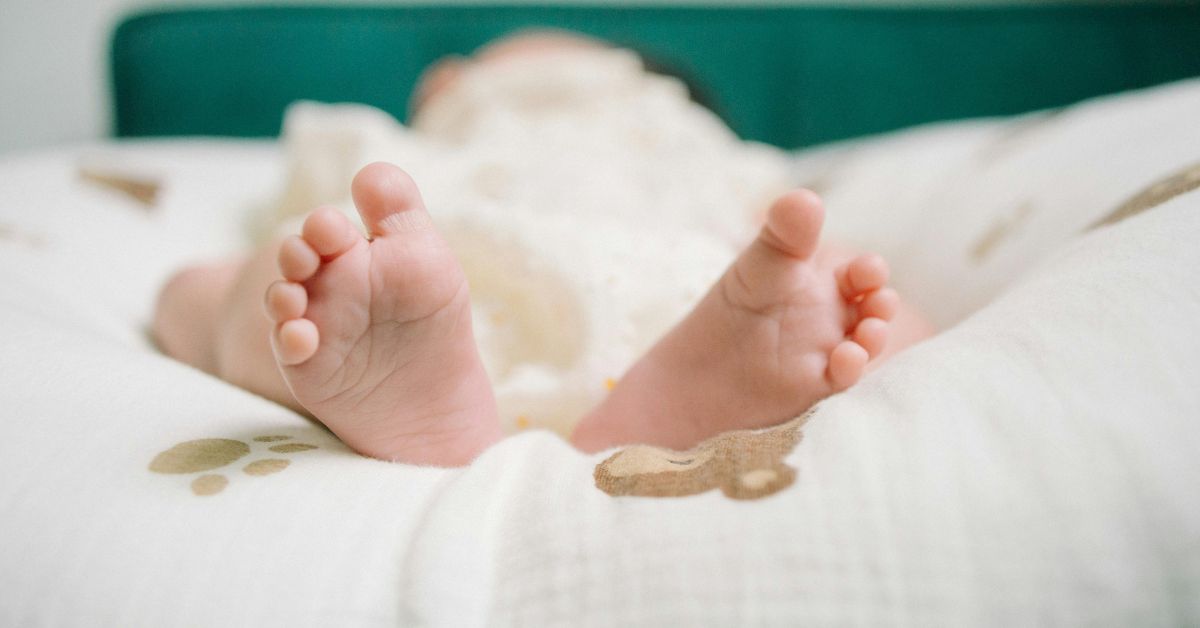
Noticing that your baby’s feet turn inward can worry many parents. This inward positioning, commonly called intoeing, is commonly referred to as a pigeon-toed stance. The condition is fairly common in infants and young children and is usually harmless. In many cases, it resolves naturally as the baby grows and develops stronger muscles and bones.
Understanding early correction techniques can help parents support proper foot alignment before their child begins walking. Early awareness and gentle guidance can play a role in helping the feet gradually align as the baby becomes more active.
What Does a Pigeon-Toed Stance Mean in Infants?
A pigeon-toed stance means the baby’s feet point inward instead of straight ahead. This can occur due to several developmental factors involving the bones, joints, or muscles of the legs and feet.
In infants who have not yet started walking, the condition is often related to the positioning of the baby inside the womb. Because the baby’s legs and feet are folded in a tight space during pregnancy, the forefoot may develop a slight inward curve.
For most infants, this is simply a temporary alignment issue that improves as the baby begins kicking, stretching, and moving their legs more freely.
Common Causes of Pigeon-Toed Alignment
Several developmental conditions may cause an infant’s feet to turn inward.
Metatarsus Adductus
Metatarsus adductus occurs when the front part of the foot curves inward while the heel remains in a normal position. This condition is one of the most common reasons infants appear pigeon-toed.
It is often caused by the baby’s position in the womb and usually improves naturally during the first year of life.
Internal Tibial Torsion
Internal tibial torsion happens when the shinbone rotates slightly inward. While it often becomes more noticeable once a child begins walking, the alignment may already exist during infancy.
Femoral Anteversion
Femoral anteversion occurs when the thighbone rotates inward at the hip joint. Although it is typically observed in toddlers or preschool-aged children, the structural alignment may begin earlier.
Parents who want to better understand the causes and possible treatments can learn more about pigeon toed conditions and how they affect early childhood development.
Early Signs Parents May Notice
Before a child starts walking, parents may observe subtle signs of inward foot positioning.
Common signs include:
- Feet that curve inward while the baby is lying down
- Toes pointing toward each other during kicking movements
- A rounded or curved outer edge of the foot
- Legs that naturally rotate inward during movement
These signs alone do not necessarily indicate a serious condition and often improve as the baby grows.
Gentle Correction Techniques for Infants
When the condition is mild and flexible, pediatricians may recommend simple techniques parents can safely perform at home.
Gentle Foot Stretching
One of the most common methods is gentle stretching of the baby’s foot.
Parents can hold the baby’s heel and slowly guide the forefoot outward into a straighter position. This movement should always be gentle and never forced.
Performing these stretches several times a day, especially during diaper changes, may help encourage proper alignment.
Encourage Natural Movement
Babies benefit greatly from unrestricted movement. Allowing infants to kick freely helps strengthen the muscles in the legs and feet.
Tummy time and supervised floor play support natural muscle development and improve overall coordination.
Avoid Tight Footwear
Infants should avoid tight or rigid footwear that restricts foot movement.
Barefoot time is ideal because it allows the muscles and bones in the feet to develop naturally. Soft socks or flexible booties are usually sufficient during infancy.
Provide Plenty of Floor Play
Floor play encourages babies to stretch, kick, and explore movement. These natural motions help strengthen muscles that support proper foot alignment.
The more babies move their legs and feet, the more likely their alignment will improve naturally.
When Medical Advice May Be Needed
Although pigeon-toed alignment is usually harmless, parents should consult a pediatrician if they notice certain warning signs.
Medical evaluation may be recommended if:
- The foot cannot be gently straightened
- The inward curve appears severe
- One foot is affected more than the other
- The condition worsens over time
Early evaluation helps doctors determine whether the condition is flexible and likely to resolve naturally.
Professional Treatment Options
If the condition does not improve with simple stretching and natural movement, pediatric specialists may recommend additional treatments.
Serial Casting
Serial casting involves applying a series of casts that gradually guide the foot into a straighter position over several weeks. This treatment is usually used when the foot is rigid or severely curved.
Orthotic Devices
Some children may benefit from braces or orthotic devices designed to support proper alignment while the bones continue developing.
Surgery (Rare Cases)
Surgery is rarely necessary and is typically considered only in severe cases that persist into later childhood and interfere with normal walking.
Supporting Healthy Leg and Foot Development
Parents can support healthy development through simple daily habits that encourage movement and muscle growth.
Helpful practices include:
- Allowing babies to move freely during playtime
- Providing regular tummy time
- Encouraging natural kicking and stretching
- Monitoring foot alignment as the child grows
These simple habits support overall motor development and may help improve foot positioning naturally.
Conclusion
A pigeon-toed stance in infants can be concerning for parents, but it is usually a normal part of early development. In most cases, the condition improves naturally as babies grow stronger and more active.
By encouraging natural movement, performing gentle stretching exercises, and monitoring development, parents can help support healthy foot alignment before their child begins walking. Early awareness and proper guidance often ensure that children develop normal walking patterns as they grow.