
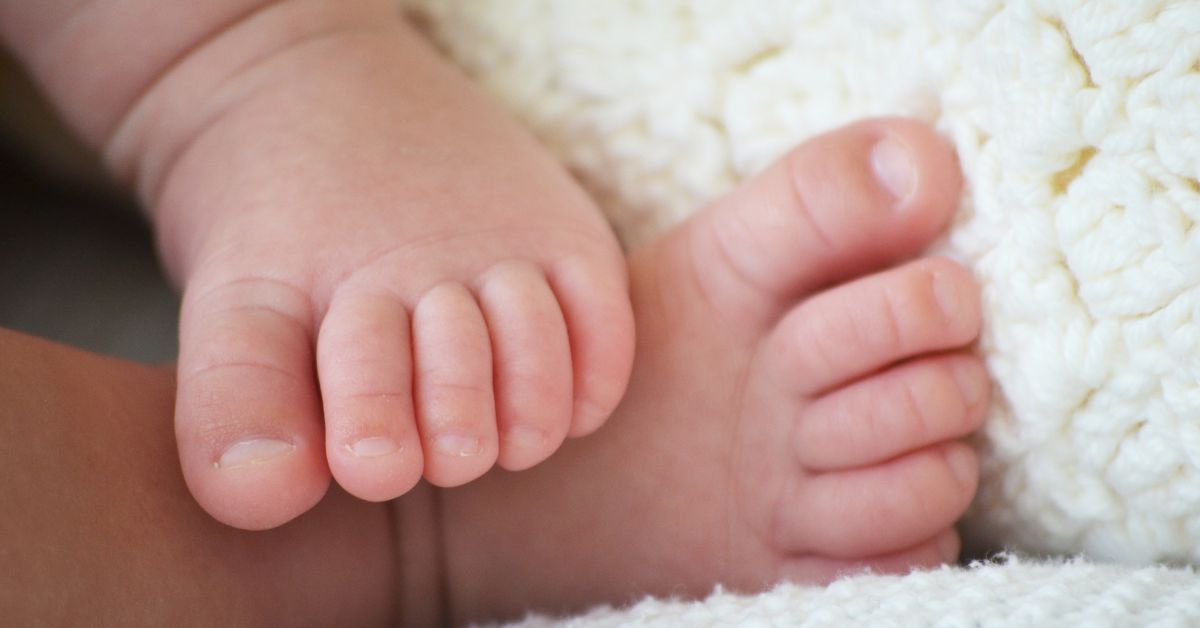
A baby’s feet can look slightly curved, turned inward, or unusual during the first months of life. In many cases, this happens because of positioning in the womb and may improve naturally as the baby grows. Because infant bones and soft tissues are still flexible, mild foot alignment issues are often monitored before treatment is recommended.
However, not every curved foot should simply be ignored. Some cases of metatarsus adductus or similar foot alignment conditions may need early support, especially when the foot is stiff, severe, or not improving over time.
Understanding Curved Feet in Babies
A curved foot in babies often refers to a condition where the front part of the foot turns inward while the heel remains more normally positioned. This can create a “C-shaped” appearance when looking at the baby’s foot from above.
Some babies have flexible feet that can be gently moved into a straighter position. Others may have a more rigid curve that does not correct easily. This difference matters because flexible cases are more likely to improve naturally, while rigid cases may require treatment.
Parents researching shoes for metatarsus adductus baby are often trying to understand whether their child may need supportive footwear, bracing, casting, or professional evaluation.
1. The Foot Cannot Be Gently Straightened
One of the most important signs to watch for is stiffness. If the front part of the baby’s foot curves inward but can be gently guided into a straighter position, the condition may be flexible. Flexible cases are often monitored because they may improve with growth and movement.
However, if the foot resists gentle correction or feels rigid, it may need more than observation.
Warning signs include:
- The foot stays curved even with gentle movement
- The baby’s forefoot feels stiff
- The curve immediately returns after being moved
- One foot is much harder to straighten than the other
Parents should never force the foot into position. If it does not move easily, a pediatrician or pediatric orthopedic specialist should evaluate it.
2. The Curve Looks Severe or Is Getting Worse
A mild inward curve may not be urgent, especially in young infants. But if the curve appears strong, deep, or more noticeable over time, it should not be dismissed.
A more severe curved foot may show:
- A strong “C-shaped” appearance
- Toes pointing sharply inward
- A deep crease along the inner side of the foot
- Difficulty placing the foot flat
- Visible difference between both feet
Foot alignment should gradually improve or remain stable. If the curve becomes more pronounced, it may indicate that the condition is not resolving naturally.
Early assessment is important because treatment is often easier when the baby’s bones and soft tissues are still highly flexible.
3. One Foot Looks Much Different From the Other
It is common for babies to have small differences between their feet. However, a major difference between the left and right foot may need closer attention.
Parents should look for:
- One foot curving inward more than the other
- One foot appearing shorter or more twisted
- One foot being much stiffer
- One side showing a deeper skin crease
- Uneven foot movement during kicking
Asymmetry does not always mean something serious, but it is a good reason to ask for a medical evaluation. A doctor can check whether the issue is isolated to the foot or related to the leg, hip, or overall alignment.
4. The Foot Position Affects Early Movement
Before walking, babies show movement through kicking, stretching, rolling, and pushing their feet against surfaces. If a curved foot appears to limit natural movement, it may need more attention.
Possible signs include:
- The baby avoids pushing with one foot
- One foot appears less active
- The foot stays turned inward during movement
- The baby seems uncomfortable when the foot is touched
- Early standing attempts look uneven
Most babies with mild metatarsus adductus do not experience pain. If discomfort, limited movement, or unusual positioning is present, it is better to have the foot checked.
5. There Is No Improvement Over Time
Some curved-foot conditions improve gradually as the baby grows. Parents may notice the foot becoming straighter as the baby kicks more, begins tummy time, and develops stronger muscles.
However, if there is little or no improvement after several months, waiting may no longer be the best approach.
Signs that monitoring may not be enough include:
- The foot looks the same after months of growth
- The curve remains obvious during routine checkups
- Stretching, if recommended, does not help
- The baby is approaching standing age with persistent inward alignment
- The doctor previously advised follow-up but the condition has not changed
A lack of progress does not always mean aggressive treatment is needed. It simply means the child may benefit from a more detailed evaluation and a clearer care plan.
Possible Treatment Options
Treatment depends on how flexible the foot is, how severe the curve appears, and the baby’s age.
Common options may include:
- Observation for mild and flexible cases
- Gentle stretching exercises recommended by a healthcare provider
- Corrective shoes or orthotic devices
- Bracing for guided positioning
- Serial casting for more rigid or severe cases
The goal is to guide the foot toward better alignment while supporting healthy development. The right treatment should always be recommended by a qualified pediatric healthcare provider.
Why Early Evaluation Matters
The first months of life are important because a baby’s bones, joints, and soft tissues are still adaptable. If a curved foot needs treatment, early guidance may make correction easier and less complicated.
Early evaluation can help determine:
- Whether the condition is flexible or rigid
- Whether the curve is mild, moderate, or severe
- Whether treatment is needed now or later
- Whether the issue may affect walking development
- Which treatment option is most appropriate
Waiting is sometimes reasonable. Guessing is not. If the signs point to stiffness, severity, asymmetry, discomfort, or lack of progress, professional advice is the safer path.
What Parents Should Avoid
Parents naturally want to help, but some actions can do more harm than good.
Avoid:
- Forcing the foot into position
- Buying corrective shoes without medical advice
- Ignoring worsening symptoms
- Comparing your baby’s progress too closely with others
- Delaying evaluation when the foot seems rigid
Not every curved foot needs treatment, but the decision should be based on proper assessment rather than hope alone.
Questions to Ask the Doctor
During an appointment, parents can ask practical questions such as:
- Is my baby’s foot flexible or rigid?
- Is this mild, moderate, or severe?
- Should we monitor it or begin treatment?
- Are stretching exercises appropriate?
- Would corrective shoes or bracing help?
- At what age should improvement be expected?
- What signs should prompt another visit?
Clear answers can help parents feel more confident and avoid unnecessary worry.
Final Thoughts
A curved foot in a baby is not always a reason to panic. Many mild cases improve naturally as babies grow and move more. However, certain signs suggest that “wait and see” may not be enough.
If the foot is stiff, severe, worsening, very different from the other side, affecting movement, or not improving over time, it is worth seeking professional guidance. Early evaluation gives parents the best chance to understand the condition and choose the right next step for healthy foot development.